Category: Property & Facility Management

  • Understanding Common Area Maintenance: What Property Owners Should Know

    Understanding Common Area Maintenance: What Property Owners Should Know

    “`html

    The Shared Burden: Understanding Common Area Maintenance Before It Consumes Your Investment

    The lease seemed straightforward: $2,500 per month for 1,200 square feet of prime retail space. Then the reconciliation notice arrived in January. Your “additional rent” for Common Area Maintenance (CAM) totaled $18,400 for the prior year—$1,533 monthly beyond your base rent. The charges included snow removal ($4,200), parking lot resurfacing ($12,000), landscaping ($3,800), and “administrative fees” ($2,100). You protest: you occupied 8% of the building, why are you paying 8% of a parking lot that serves twenty other tenants? The landlord slides the lease across the table, pointing to Clause 14.3: “Tenant shall pay proportionate share of all CAM expenses as defined herein.” You signed it. Now you’re paying for it.

    The expenses that determine whether your commercial property investment generates yield or hemorrhages cash aren’t found in the base rent calculations—they’re buried in the CAM provisions that transform fixed costs into variable liabilities. Common Area Maintenance charges represent the mechanism by which landlords transfer the operational costs of lobbies, parking structures, elevators, and landscaping from their balance sheets to their tenants’ ledgers. Yet research from commercial real estate transaction studies indicates that 43% of property owners (both landlords and tenants) misunderstand their CAM obligations, leading to annual reconciliation disputes that consume administrative resources and destroy landlord-tenant relationships.

    This opacity creates a dangerous information asymmetry. Landlords control the expense data, the vendor selection, and the calculation methodology, while tenants receive estimated bills monthly and reconciliation statements annually—often with insufficient detail to verify accuracy. For condo and HOA owners, CAM takes the form of assessments that fund shared roofs, boilers, and amenities, with underfunded reserves creating special assessments that can exceed $50,000 per unit in aging buildings. Understanding how to structure, audit, and negotiate CAM provisions transforms you from a passive recipient of opaque charges into an active steward of your property’s financial architecture.

    Defining the Commons: What Actually Qualifies as CAM

    Common Area Maintenance encompasses any expense related to the operation, repair, and maintenance of spaces shared among multiple occupants. In commercial contexts (retail, office, industrial), this includes lobbies, corridors, restrooms, parking facilities, elevators, and exterior landscaping. In residential contexts (condominiums, co-ops, HOAs), CAM expands to include structural elements—roofs, foundations, building envelopes—and shared mechanical systems that single-family homeowners maintain individually.

    The critical distinction lies between operating expenses and capital improvements. CAM traditionally covers maintenance (preserving current condition) and repair (fixing broken elements), but excludes capital expenditures (adding value or extending useful life). When a landlord replaces a 20-year-old HVAC system with a new high-efficiency unit, that’s typically a capital improvement funded by the landlord or reserve accounts, not a CAM charge passed to tenants. However, the annual servicing of that existing HVAC system—filter changes, refrigerant top-offs, belt replacements—constitutes legitimate CAM.

    The Building Owners and Managers Association (BOMA) standards provide industry definitions, but individual leases determine actual inclusions. A poorly drafted lease might allow the landlord to charge tenants for leasing office salaries, property management fees, or even capital improvements disguised as “replacement reserves.” The CAM clause functions as a blank check unless specifically bounded by exclusion lists and audit rights.

    The CAM Inclusion Spectrum

    Standard Inclusions: Janitorial services for common areas, utilities for shared spaces, landscaping, snow removal, parking lot lighting, elevator maintenance, property insurance (common areas only), real estate taxes (common area portion)

    Grey Areas: Capital repairs (roof replacement vs. roof patching), management fees (on-site vs. third-party), marketing costs (for shopping centers), security systems

    Should Be Excluded: Leasing commissions, landlord’s legal fees, capital improvements, depreciation, reserves for future capital expenses

    The Calculation Architecture: Pro-Rata Shares and Base Years

    CAM charges distribute costs according to “proportionate share”—typically calculated as the tenant’s square footage divided by the total leasable square footage of the property. A 2,000 square foot tenant in a 100,000 square foot building pays 2% of total CAM expenses. This seems straightforward until you encounter the denominator games: does “total leasable” include vacant space? Storage areas? Common areas themselves?

    The “gross-up” provision addresses vacancy. If the building is 80% occupied, the landlord may gross-up CAM calculations to reflect 100% occupancy, meaning remaining tenants pay higher shares to cover costs that would theoretically be borne by vacant space. This protects landlords from cash flow shortfalls but penalizes tenants during economic downturns when vacancies rise. Conversely, some leases cap CAM contributions at the tenant’s opening year occupancy percentage, protecting against sudden increases but potentially underfunding maintenance in high-vacancy scenarios.

    Base year provisions create expense stops—common in office leases. The landlord establishes a “base year” (typically the first lease year) and tenant pays only CAM increases above that baseline. If base year CAM was $10/SF and current CAM is $12/SF, the tenant pays the $2/SF increase. This incentivizes landlords to control costs but requires meticulous base year documentation; an understated base year locks tenants into paying inflated differentials for the lease term.

    Calculation Method How It Works Protects Whom Risk Scenario
    Pro-Rata (Actual) Tenant pays % of actual costs based on occupied space Landlord during high occupancy Tenant bears full cost during vacancies
    Gross-Up Costs calculated as if building 95-100% occupied Landlord during vacancies Tenant overpays for vacant space utilities
    Base Year Stop Tenant pays only increases above Year 1 costs Tenant against inflation Landlord underfunded if base year inflated
    Fixed CAM Flat fee per square foot, no reconciliation Both parties (predictability) Landlord loses if costs rise; tenant loses if costs fall

    The Reconciliation Ritual: When Estimates Meet Reality

    Most leases require landlords to estimate annual CAM costs and bill tenants monthly ($1.20/SF estimated = $100/month for 1,000 SF tenant). Then, within 90-120 days of year-end, the landlord provides reconciliation statements comparing estimated collections against actual expenses. If actual CAM was $1.35/SF, the tenant owes the $0.15/SF difference ($150 for the year). If the landlord over-collected, refunds are due.

    This reconciliation process represents the primary battleground for CAM disputes. Landlords may delay reconciliation beyond lease-mandated windows, obscuring expense details behind “miscellaneous” line items, or applying “administrative fees” (typically 10-15% of total CAM) that lack clear justification. Without audit rights specified in the lease, tenants must pay disputed amounts under protest or face default, preserving their right to challenge later while maintaining tenancy.

    For condominium and HOA owners, reconciliation takes the form of annual budget meetings where boards present projected expenses and assessment rates. Unlike commercial tenants, association members can vote for board members who control spending, but they remain bound by majority decisions. Underfunded reserves in HOAs create “special assessments”—one-time charges for capital projects that can exceed $20,000 per unit for roof replacements or elevator modernizations. The Community Associations Institute recommends maintaining reserve funds at 70-100% of fully funded status to prevent these liquidity shocks.

    The Audit Imperative

    Sophisticated lease negotiations include audit rights allowing tenants (or their accountants) to inspect CAM receipts, invoices, and general ledger entries. Without this provision, you’re trusting the landlord’s math. Even with audit rights, the cost of professional review ($2,000-5,000) may exceed recoverable discrepancies for small tenants, creating a “justice gap” where only anchor tenants can afford to verify charges.

    When auditing, focus on high-impact categories: property management fees (should be market rate, not padded), capital items misclassified as repairs (a new roof billed as “roof maintenance”), and double-charging (utilities included in CAM but also separately metered). Common area definitions also require verification—if you’re paying for “parking lot maintenance” but the lot serves a separate building the landlord owns next door, you may be subsidizing unrelated assets.

    Reserve Funds: The Capital Expenditure Grey Zone

    The most contentious CAM disputes involve reserves—funds collected annually to pay for future capital replacements. Should tenants fund a roof replacement reserve for a roof they’ll never see installed because their lease expires in three years? Landlords argue yes: current tenants benefit from roof preservation and should contribute to its eventual replacement. Tenants argue no: they’re paying for improvements that primarily benefit future occupants and the landlord’s asset value.

    Lease language determines the outcome. Well-drafted leases explicitly exclude “replacement reserves” from CAM, limiting charges to actual cash expenditures for maintenance and repair. Poorly drafted leases allow landlords to collect 5-10% “reserve contributions” annually, building war chests for capital improvements while classifying the collections as operating expenses. For multi-tenant retail, reserves for parking lot resurfacing or HVAC replacement should be treated as capital planning, not CAM-eligible expenses.

    Condominium owners face the inverse problem: chronically underfunded reserves. State laws increasingly mandate reserve studies—professional engineering assessments that project repair timelines and costs for major systems. Florida’s structural integrity regulations (post-Surfside collapse) now require mandatory reserve funding for buildings over three stories, eliminating the ability of condo boards to waive reserves and kick the financial can down the road.

    Red Flags in CAM Statements

    Vague Categories: “General Maintenance” exceeding 20% of total CAM without itemization

    Management Fee Markups: Administrative fees above 15% or management fees charged on top of CAM (double-dipping)

    Capital Disguised as Repair: “HVAC replacement” billed as “HVAC repair” or “long-term maintenance”

    Missing Credits: Insurance deductibles recovered from claims not credited back to tenants; utility rebates retained by landlord

    Negotiation Architecture: Protecting Your Position

    Whether you’re a tenant negotiating a lease or an owner negotiating HOA terms, CAM provisions require the same diligence as rent calculations. Demand an “excluded expenses” list that explicitly bars capital improvements, leasing costs, and landlord legal fees from CAM. Negotiate audit rights with cost-shifting provisions (if the audit finds 5%+ overcharge, landlord pays audit costs). Cap annual CAM increases at 5-10% or tie them to CPI to prevent shock escalations.

    For prospective tenants, request three years of CAM history and reconciliation statements before signing. If the landlord claims CAM runs $8/SF but historical data shows $12/SF with upward trajectory, budget for the higher number or negotiate a cap. “Fixed CAM” arrangements—paying $10/SF flat with no reconciliation—trade potential savings for predictability, often worthwhile for small tenants lacking accounting resources to audit complex reconciliations.

    Condo buyers should scrutinize reserve studies and assessment history before purchase. A building with 50% funded reserves and no special assessments for five years is a ticking time bomb. Review meeting minutes for deferred maintenance mentions; “we’ll address the roof next year” for three consecutive years signals an assessment incoming. The Community Associations Institute maintains standards for reserve study frequency and methodology—ensure your association follows them.

    The Transparency Imperative

    The common areas you share with fellow occupants—whether a retail parking lot, an office lobby, or a condominium roof—represent both the amenities that make the property usable and the financial liabilities that make it potentially unaffordable. Without strict attention to CAM calculations, audit rights, and reserve funding, you become a passive donor to a system that obscures costs until they become crises.

    Your power as a property stakeholder doesn’t come from simply paying your share; it comes from understanding exactly what you’re paying for, challenging misclassifications, and ensuring that capital improvements remain distinct from operating expenses. You can be the tenant who blindly pays reconciliation bills, hoping the landlord is honest, or you can be the owner who maintains reserve studies, challenges inflated management fees, and verifies that snow removal actually occurred.

    The choice is yours. Start with the lease clause or the association bylaws. Read the CAM definitions. Question the administrative fees. Demand the audit rights. Your investment deserves transparency—not the opacity that turns common areas into common burdens.

    Key Takeaways

    CAM includes operating expenses for shared spaces (maintenance, utilities, insurance) but should exclude capital improvements, leasing costs, and landlord-specific expenses like legal fees.

    Calculation methods vary: pro-rata shares based on square footage, gross-up provisions during vacancies, base year expense stops, or fixed CAM arrangements with no reconciliation.

    Annual reconciliation statements (provided 90-120 days post-year-end) require scrutiny for capital items misclassified as repairs, excessive administrative fees, and missing credits (insurance recoveries).

    Audit rights specified in leases allow tenants to verify CAM calculations; without them, tenants must pay under protest or accept potentially inflated charges.

    Reserve funding for capital replacements should be excluded from CAM charges in commercial leases; conversely, condo owners must verify reserves are adequately funded (70-100% of requirements) to avoid special assessments.

    “`
  • Preventive Maintenance Schedules for Residential Properties

    Preventive Maintenance Schedules for Residential Properties

    “`html

    The Clockwork Property: Building Preventive Maintenance Schedules That Protect Your Investment

    The emergency call comes at 2:47 AM on a Saturday. The water heater has failed catastrophically, flooding the basement with 40 gallons of rusty water, ruining the tenant’s stored belongings and the new laminate flooring you installed six months ago. As you stand in ankle-deep water with a wet-dry vac, calculating the $3,400 emergency plumber bill, the $2,800 flooring replacement, and the $1,200 tenant property claim, you remember the manufacturer’s sticker: “Flush annually to prevent sediment buildup.” You didn’t flush it. Not last year, not the year before. The $200 annual maintenance just became a $7,400 emergency—and a tenant who will not renew.

    The structural integrity that determines whether your property appreciates or depreciates isn’t maintained in crisis mode—it’s preserved in the quiet rhythm of quarterly inspections, seasonal tune-ups, and annual replacements that happen long before failure. Preventive maintenance schedules function as the immune system of residential real estate, identifying and resolving small dysfunctions before they metastasize into property-threatening emergencies. Yet research from National Association of Realtors maintenance studies indicates that 68% of residential landlords operate on purely reactive maintenance models, spending an average of $2,800 annually per unit on emergency repairs that could have been prevented with $400 in scheduled upkeep.

    This reactive gap creates a dangerous financial polarity: properties either deteriorate through neglect (destroying asset value and tenant retention) or hemorrhage cash through emergency premiums (after-hours labor rates, rush shipping for parts, water damage mitigation). While institutional investors employ asset management software that schedules HVAC filter replacements with military precision, individual landlords often rely on sticky notes and memory—systems guaranteed to fail precisely when turnover or vacancies disrupt routine. Mastering the architecture of preventive maintenance transforms you from a crisis firefighter into a portfolio steward who protects capital through systematic care.

    The Reactive Trap: Why Emergency Maintenance Destroys ROI

    Emergency maintenance operates on the economics of desperation. When the furnace fails during a polar vortex, you don’t compare quotes—you hire whoever answers the phone at midnight, paying 1.5x to 3x standard labor rates plus emergency trip charges. The $150 annual furnace tune-up you skipped becomes a $900 middle-of-the-night replacement call, plus hotel costs for displaced tenants if habitability laws require relocation.

    The cascade effects compound the direct costs. Deferred gutter cleaning leads to ice dams, which cause roof leaks, which create mold remediation needs, which require drywall replacement—all traceable to the $150 gutter service that didn’t happen. A study on building lifecycle costs demonstrates that every $1 invested in preventive maintenance saves approximately $4 in deferred capital expenditures and emergency repairs over a ten-year holding period.

    Tenant relations suffer asymmetrically under reactive models. When you prevent a problem, tenants notice nothing—they simply live in a functioning space. When you react to emergencies, tenants experience displacement, discomfort, and the anxiety of unpredictable failures. The tenant whose air conditioning failed twice in one summer (despite your prompt repairs) will still leave a one-star review citing “constant maintenance issues,” while the tenant whose system received annual preventive service leaves no review at all, associating your management with seamless reliability.

    The True Cost of Deferred Maintenance

    Scenario A (Preventive): Annual HVAC service ($180) + Filter changes ($60) = $240/year. System lifespan: 15 years. Total cost: $3,600.

    Scenario B (Reactive): No service for 5 years, compressor failure ($2,400 emergency replacement), 2 years later full system failure ($6,000 replacement), plus tenant turnover due to discomfort ($1,200 vacancy cost). Total cost: $9,600+.

    The Deferral Tax: 266% higher costs, plus tenant churn, plus reputation damage.

    The Seasonal Rhythm: Annual Maintenance Orchestration

    Preventive maintenance follows natural cycles—systems stressed by summer heat need fall recovery, winter freeze protection requires autumn preparation. Organizing tasks by season creates predictable workflows and prevents the “everything at once” overwhelm that leads to paralysis.

    Spring serves as the diagnostic season. As snow melts and ground thaws, inspect for winter damage: foundation cracks from frost heave, roof shingles displaced by ice, gutters dislodged by heavy snow. Test irrigation systems before the dry season demands daily watering. Service air conditioning units before the first heat wave creates a three-week backlog for HVAC technicians. This is also the ideal window for exterior painting and deck sealing, with moderate temperatures ensuring proper curing.

    Summer shifts focus to high-performance monitoring. HVAC filters need monthly checks during heavy use cycles. Irrigation systems require weekly inspection for broken heads or coverage gaps that waste water and brown lawns. Inspect caulking around windows and doors—summer expansion reveals gaps that winter contraction will turn into heat-loss avenues. This is also the season for tree trimming, when arborists can identify dead limbs before summer storms convert them into roof-piercing projectiles.

    The Autumn Preparation Window

    Fall represents the critical preparation phase. Winterize irrigation systems (blowing out lines to prevent freeze damage), service furnaces before the first cold snap creates technician shortages, and inspect fireplaces and chimneys before heating season begins. Clean gutters thoroughly after the last leaf fall—clogged gutters in winter create ice dams that destroy roofing substrates. Inspect weatherstripping and exterior caulking; the thermal contraction of winter will exploit any gaps.

    Winter shifts to interior systems and emergency prevention. Test smoke and carbon monoxide detectors (replacing batteries annually, units every ten years). Inspect under sinks and around toilets for slow leaks that evaded notice during busy summer months. Check attic insulation for moisture intrusion or pest disturbance. This is also the season for deep-cleaning dryer vents—a leading cause of residential fires that preventive maintenance eliminates.

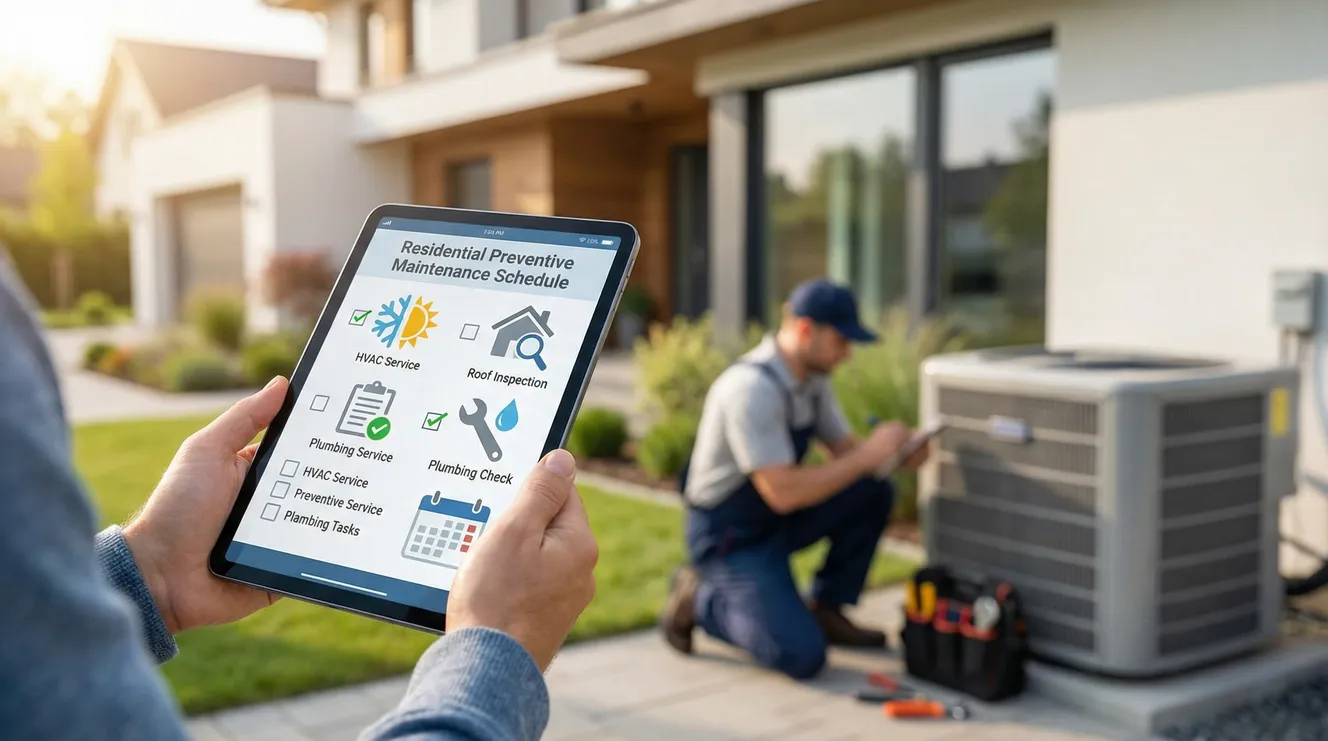
    Season Priority Systems Critical Tasks Cost Range
    Spring Exterior, HVAC (Cooling), Irrigation Roof inspection, AC service, gutter repair, deck sealing $400-$800
    Summer Landscaping, HVAC (Monitoring), Exterior Irrigation audits, tree trimming, filter changes, caulking inspection $200-$500
    Fall Heating, Exterior, Plumbing Furnace service, gutter cleaning, winterization, weatherstripping $500-$1,000
    Winter Safety Systems, Interior, Air Quality Detector testing, dryer vent cleaning, leak inspection, filter changes $150-$300

    System-Specific Protocols: The Critical Components

    Beyond seasonal sweeps, individual building systems require specialized attention on distinct timelines. Treating all maintenance as equivalent leads to premature failures in critical infrastructure while wasting money on cosmetic touch-ups.

    HVAC Systems demand biannual professional service—spring for cooling, fall for heating. This includes refrigerant level checks, electrical connection tightening, blower motor lubrication, and heat exchanger inspection (critical for detecting carbon monoxide risks). Between professional visits, replace 1-inch filters every 60-90 days, or 4-inch media filters every six months. Neglecting filter changes forces systems to work harder, shortening compressor life by 30-50%.

    Plumbing infrastructure requires annual water heater flushing to remove sediment that reduces efficiency and causes tank bottom corrosion. Inspect visible supply lines (under sinks, behind toilets) for bulging, discoloration, or moisture—plastic PEX and copper last decades, but rubber washing machine hoses should be replaced every three to five years before they burst. Test water pressure annually; pressure over 80 PSI strains fixtures and pipe joints, requiring pressure-reducing valve installation.

    Roofing and drainage systems need semi-annual gutter cleaning (minimum) and annual roof inspection. Look for lifted shingles, cracked flashing around chimneys, and granule loss indicating asphalt deterioration. Flat roofs require particular attention to drainage—standing water destroys membrane roofing in months. Clean dryer vents annually (or quarterly for multi-family buildings with high usage) to prevent lint buildup that creates fire hazards and reduces appliance efficiency.

    The Five-Year Capital Cycle

    Every 3-5 Years: Carpet replacement (high-traffic units), exterior paint touch-ups, water heater anode rod replacement, garage door spring inspection

    Every 5-10 Years: Full exterior painting, HVAC component replacement (not full system), appliance replacement (dishwasher, microwave), toilet mechanism replacement

    Every 10-15 Years: Roof replacement (asphalt shingles), HVAC full system, water heater replacement, window seal replacement, major plumbing repiping (if galvanized steel)

    Documentation Systems: The Maintenance Ledger

    Preventive maintenance without documentation is guesswork. You cannot determine whether the water heater was flushed last year or three years ago from memory, and you cannot prove to buyers or insurers that systems were maintained without receipts. A maintenance log serves as the medical history of your property, guiding future decisions and protecting against warranty disputes.

    Digital property management platforms like Buildium or AppFolio include maintenance tracking modules, but even a simple spreadsheet suffices for smaller portfolios. Track: Date of service, service provider, specific work performed, parts replaced, next scheduled service date, and cost. Photograph before/after conditions for significant repairs—these images prove baseline condition during security deposit disputes or insurance claims.

    Create a “unit file” for each property containing appliance manuals, warranty information, paint codes (sheen and brand), and contractor contact history. When the dishwasher fails, knowing the model number and purchase date instantly determines whether it’s under warranty. When you need to touch up exterior trim, having the exact Sherwin-Williams color code prevents mismatched patches.

    DIY vs. Professional: Knowing Your Boundaries

    The preventive maintenance schedule must distinguish between owner-performed tasks and licensed contractor requirements. Attempting complex work to save money often voids warranties, violates insurance policies, and creates liability exposure. Changing HVAC filters is maintenance; adjusting refrigerant levels requires EPA certification. Cleaning gutters is maintenance; electrical panel upgrades require permits and electricians.

    The “handyman threshold” determines your approach: if the task requires specialized tools you don’t own, permits you don’t understand, or involves systems that can kill you (natural gas, electrical panels, roofing), hire professionals. The money saved on DIY furnace repair evaporates when the carbon monoxide leak hospitalizes tenants and your insurance denies the claim due to unlicensed work.

    Establish relationships with reliable contractors during non-emergency periods. The HVAC company that services your unit annually in September will answer your call in January when the heat fails. The roofer who inspects annually will prioritize your emergency patch. These relationships cost money—expect to pay $120-200 for an HVAC service call that finds “nothing wrong”—but they buy you access and expertise when systems inevitably fail.

    The DIY Boundary Matrix

    Owner Appropriate: Filter changes, caulking, touch-up painting, gutter cleaning (single story), lawn care, detector battery replacement, dryer vent cleaning (interior), leak monitoring

    Licensed Required: HVAC refrigerant, electrical work beyond fixture replacement, gas line work, roofing repairs, major plumbing rerouting, structural modifications, pest control (chemical)

    The Reserve Strategy: Budgeting for the Inevitable

    Preventive maintenance requires capital allocation. Industry standards suggest reserving 1% to 3% of property value annually for maintenance and capital expenditures—a $300,000 property needs $3,000-9,000 yearly set aside. Older properties (20+ years) or those in harsh climates (freeze-thaw cycles, coastal salt air) require the higher end of this range.

    Create sub-accounts for different maintenance categories: Immediate repairs (broken appliances), preventive service contracts (HVAC maintenance agreements), and capital reserves (roof replacement fund). Co-mingling these leads to spending the roof money on emergencies, then facing a $12,000 replacement with no reserves when the shingles fail.

    Consider “home warranty” programs cautiously. While they transfer risk for major system failures, they often require using slow-response contractors and exclude pre-existing conditions (which preventive maintenance would have identified). For disciplined investors who maintain reserves, self-insuring through preventive care typically yields better service and lower total costs than warranty premiums and deductibles.

    The Property Is a Living System

    Your residential property is not a static asset but a complex organism of interdependent systems—electrical, hydraulic, thermal, structural—each requiring specific nutrients (maintenance) at specific intervals. When you ignore these biological rhythms, the organism gets sick. The leak becomes rot, the neglect becomes crisis, the savings become catastrophe. But when you align your management with the natural cycles of wear and season, the property rewards you with longevity, tenant stability, and compound appreciation.

    Your power as a property steward doesn’t come from fixing things quickly when they break; it comes from preventing the breakage entirely through the discipline of scheduled care. The spring inspection that catches the loose shingle prevents the fall leak. The fall furnace tune-up prevents the winter midnight emergency. The annual dryer vent cleaning prevents the fire that destroys the building.

    The choice is yours. You can remain the landlord who jumps from crisis to crisis, who knows the emergency plumbers by name, who watches property values stagnate because deferred maintenance becomes visible deterioration. Or you can implement the clockwork schedule—the quarterly inspections, the seasonal services, the documented care that preserves capital. Start with one system: the HVAC service contract, the gutter cleaning schedule, the water heater flush. Build the rhythm. Your property will outlast the market cycles because you maintained it through the cycles.

    Key Takeaways

    Preventive maintenance generates a 4:1 return on investment compared to reactive repairs, while preventing the tenant churn and reputation damage associated with emergency failures.

    Seasonal scheduling (Spring diagnostics, Summer monitoring, Fall preparation, Winter safety) creates manageable workflows aligned with natural system stresses.

    Critical systems require specialized protocols: HVAC biannual service, annual water heater flushing, semi-annual gutter cleaning, and annual safety system testing.

    Documentation (service logs, warranty files, paint codes, contractor relationships) transforms maintenance from memory-dependent guesswork into transferable asset management.

    Reserve allocation of 1-3% of property value annually, segregated by immediate repairs, preventive contracts, and capital replacement funds, ensures maintenance never depends on cash flow timing.

    “`

  • What to Look for in Property Management Software

    What to Look for in Property Management Software

    “`html

    The Digital Landlord: What to Look for in Property Management Software Before You Sign the Lease

    The rent is due on the first, but three tenants paid late—one via Venmo, one with a check slid under your door, and one who “forgot” despite your text reminder. The water heater in Unit 4 just failed, but you can’t remember if the warranty expired last month or next month. Your accountant is asking for categorized expense reports, and you’re staring at a shoebox of receipts. Meanwhile, a prospective tenant just emailed asking about availability, but you haven’t updated the listing since you signed a lease three days ago. This is property management without infrastructure: reactive, scattered, and slowly consuming your sanity.

    The decisions that determine whether your rental portfolio becomes passive income or a second job aren’t made at closing—they’re made when you select the digital infrastructure that will manage your assets. Property management software serves as your virtual leasing office, accounting department, and maintenance coordinator, yet research from National Association of Realtors technology surveys indicates that 42% of small landlords still manage properties using spreadsheets and consumer payment apps, manually tracking the complex financial and legal obligations that specialized software automates.

    This tool gap creates a dangerous illusion of control. While DIY management feels cost-effective for one or two units, it creates scaling friction that prevents portfolio growth and legal vulnerabilities that expose you to tenant disputes. The right software doesn’t just digitize your current chaos; it imposes the financial discipline, documentation standards, and operational consistency that separate amateur landlords from professional real estate investors. Understanding how to evaluate these platforms—beyond glossy marketing and feature bloat—transforms you from a reactive superintendent into a strategic asset manager.

    The Financial Nervous System: Accounting That Protects You

    Every property management decision eventually becomes a financial transaction, yet generic accounting software (QuickBooks, FreshBooks) treats rental properties as standard small businesses, missing the industry-specific nuances that create tax advantages and legal protections. True property management software builds accounting into the operational workflow—automatically categorizing rent income, security deposits, and maintenance expenses according to IRS Schedule E requirements.

    Look for platforms that handle trust accounting: security deposits held in separate escrow accounts, legally distinct from operating funds. In many jurisdictions, commingling tenant deposits with your general checking account violates landlord-tenant law. Software like AppFolio or Buildium maintains these separations automatically, generating the ledger reports that satisfy state audit requirements without manual reconciliation.

    Owner draw calculations represent another critical feature. If you manage properties for other investors (or simply want clear P&L per property for your own portfolio), the software should track gross rent, management fees, maintenance reserves, and net owner distributions with automatic owner statements. This isn’t just convenience; it’s fiduciary responsibility. Investors who receive clear monthly statements stay invested; those who receive chaotic spreadsheets sue.

    The Accounting Feature Hierarchy

    Non-Negotiable: Automated rent collection, late fee calculation, security deposit tracking, 1099 generation for contractors, bank reconciliation

    Professional Grade: CAM (Common Area Maintenance) reconciliation for commercial, budgeting tools, cash flow forecasting, automated owner statements

    Enterprise: Multi-entity accounting, cross-border currency handling, advanced depreciation tracking, integrated mortgage servicing

    The Tenant Interface: Portal as Property Manager

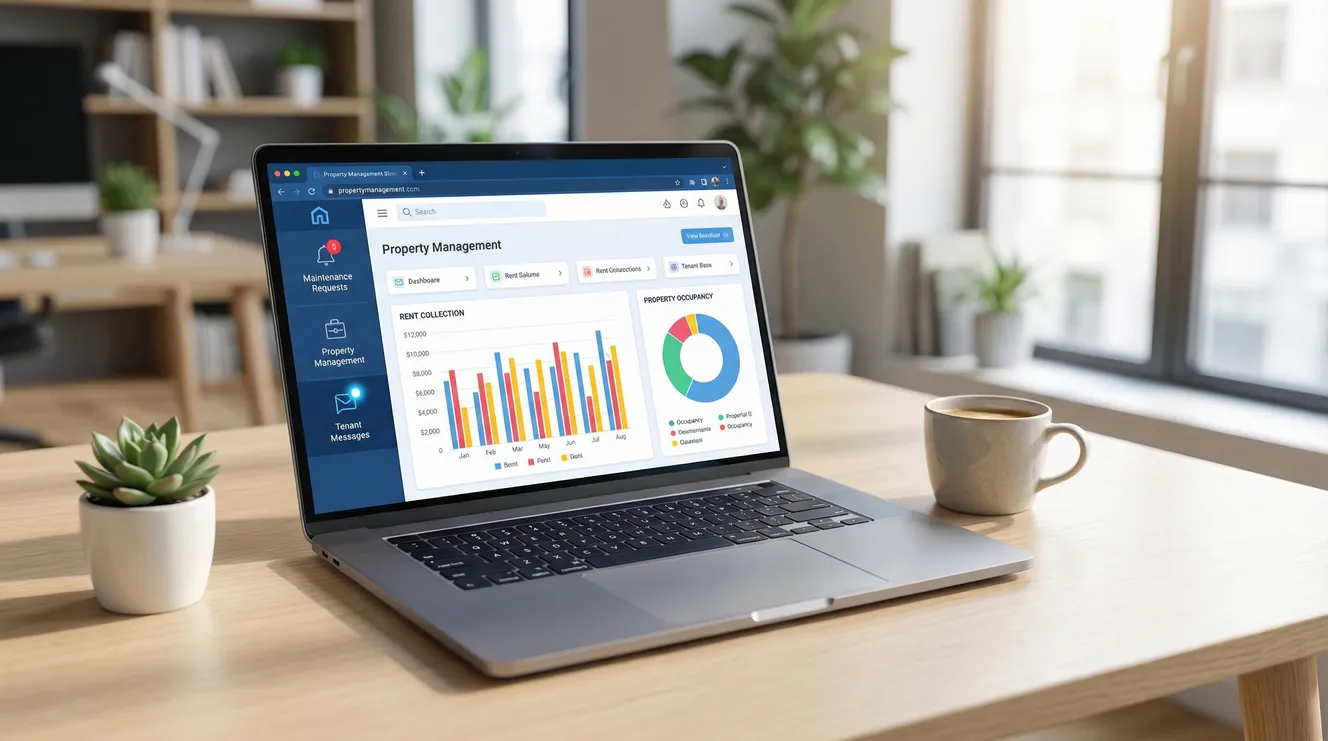
    The modern tenant expects digital self-service comparable to their banking or shopping experiences. A robust tenant portal eliminates the “landlord as bottleneck” problem, allowing residents to submit maintenance requests with photos, track work order status, pay rent via ACH or card (with processing fees often passed to tenants), and access lease documents without texting you at midnight.

    Screening integration separates serious platforms from basic rent trackers. Look for software that partners with TransUnion, Experian, or Equifax to provide credit checks, criminal background searches, and eviction history without you handling sensitive applicant data. The best systems allow prospective tenants to pay screening fees and submit applications online, creating a digital paper trail that Fair Housing compliance auditors appreciate.

    Communication logging provides legal armor. When disputes arise—and they will—courts favor landlords who can produce documented communication histories. Software that maintains timestamped message threads, email integration, and SMS logging within the tenant file creates the evidentiary record that verbal agreements or scattered text messages cannot. Platforms like RentRedi emphasize this communication trail as a core compliance feature.

    The Mobile Imperative

    Property management happens in the field—at vacancies, during inspections, in emergency situations. Native mobile apps (not just mobile-responsive websites) allow you to photograph damage, log expenses immediately, and approve applications while standing in the unit. Inspect the app’s offline functionality; if you lose signal in a basement storage unit, you need the ability to sync data once you regain connectivity.

    Tenant Portal Feature Landlord Benefit Compliance/ROI Impact
    Online Rent Collection Eliminates check handling, auto-calculates late fees Reduces late payments by 30-40%; automatic late fee enforcement
    Maintenance Requests with Photos Triages emergencies vs. cosmetic issues remotely Documented pre/post condition for deposit disputes
    Digital Lease Signing Remote leasing, automatic document storage Legal validity with audit trails; reduces vacancy days
    Tenant Screening Integration One-click credit/criminal checks Fair Housing compliance; consistent application standards

    Maintenance Orchestration: From Panic to Process

    Maintenance coordination consumes disproportionate mental bandwidth for landlords. The 2 AM emergency call, the contractor who didn’t show, the tenant complaining about slow repairs—these friction points destroy retention. Sophisticated software transforms maintenance from reactive chaos into managed workflow.

    Work order systems should allow tenants to categorize requests (emergency/urgent/routine), upload photos, and specify access instructions. You then need vendor management: a database of preferred contractors with insurance verification, contact details, and historical pricing. The best platforms (like Propertyware) allow direct assignment to vendors with tenant notification, then track completion and collect tenant satisfaction ratings.

    Preventive maintenance scheduling separates professional operators from perpetual crisis managers. The software should track appliance warranties, HVAC filter replacement schedules, and seasonal inspections, generating automated reminders before failures occur. A $200 furnace filter replacement scheduled by the system prevents the $3,000 emergency repair that happens when you forget.

    The Maintenance Workflow Spectrum

    Basic: Tenant emails/texts you; you call contractors manually; payment tracked in spreadsheet

    Managed: Tenant submits portal request; you assign to vendor; payment tracked in software

    Optimized: Tenant submits request with photos; software suggests vendor based on issue type/location; tenant approves estimate online; payment auto-deducted from escrow; satisfaction survey triggers follow-up

    Portfolio Architecture: Scaling Without Fragmentation

    The software that manages three units adequately may collapse under the complexity of thirty. Scalability considerations include multi-owner structures (if you manage for investors), commercial vs. residential mixed portfolios, and multi-state compliance where different landlord-tenant laws apply.

    Unit-based pricing models punish growth. Many platforms charge per door—$10-15/month per unit. At five units, this is negligible; at fifty units, you’re paying $500-750/month for software. Flat-rate pricing (often tiered by unit count ranges) preserves margins as you scale. However, scrutinize “unlimited” plans for hidden limits on transactions, storage, or users that trigger expensive overages.

    Vacancy management tools become critical at scale. You need listing syndication (pushing vacancies to Zillow, Apartments.com, Facebook Marketplace simultaneously), showing scheduling that prevents double-booking, and lead tracking that measures which marketing channels produce qualified tenants. Software like MRI Software specializes in these enterprise-level marketing and leasing workflows for larger portfolios.

    The Integration Web: Playing Nice With Your Stack

    Property management software doesn’t operate in isolation. It must sync with your business bank accounts (for automated reconciliation), tax software (TurboTax, CPA portals), and marketing platforms. API access separates closed systems from extensible infrastructure—if the platform doesn’t integrate with your preferred accounting software natively, robust APIs allow Zapier or custom developers to bridge the gap.

    Smart home integration represents emerging functionality. Platforms that connect to smart locks allow temporary codes for showings without you present; water leak sensors can trigger automatic work orders before catastrophic damage; thermostat controls enforce reasonable energy usage during vacancies. These IoT connections reduce physical site visits—the hidden time cost that destroys profitability on scattered-site portfolios.

    Pricing Models: The True Cost of Ownership

    Beyond subscription fees, property management software extracts costs through payment processing (ACH typically 1-2%, credit cards 2.9-3.5%), setup fees, training charges, and “white glove” onboarding. A platform advertising $50/month might cost $200/month after payment processing on $10,000 rent collection.

    Freemium models (like Cozy, now part of Apartments.com) offer basic rent collection and maintenance tracking for free, monetizing through credit check fees and expedited payments. These work for single-unit landlords but typically lack the accounting rigor and owner-reporting features necessary for professional management. Treat freemium as a trial, not a destination.

    Hidden Cost Audit Checklist

    Payment Processing: Who pays the credit card fees? Is there a markup on ACH transfers?

    Data Export: Will you be charged to extract your data if you switch platforms later?

    User Limits: Do you pay extra for accountants, virtual assistants, or property owners to access reports?

    Support Tiers: Is phone support included, or do you pay $200/hour for help setting up your chart of accounts?

    Implementation Reality: Migration Without Vacancy

    Switching property management software while managing active tenancies resembles changing the engine while driving. Data migration includes tenant contact information, lease terms (start/end dates, rent amounts, security deposits), historical payment records, and outstanding maintenance issues. If this transfer happens mid-month, you risk double-charging tenants or losing the audit trail for security deposits.

    Most platforms offer onboarding support, but quality varies dramatically. Expect 30-60 days to fully transition, running parallel systems (old and new) for at least one rent cycle to ensure no payments disappear into the void. Verify that the new platform can import your existing lease data via spreadsheet; manual entry of twenty tenant profiles is error-prone and soul-destroying.

    Tenant communication about the switch requires careful handling. Frame the new portal as improved service (“You’ll now be able to pay online and submit maintenance photos!”), not as your administrative convenience. Provide paper backup for the first month—don’t let a tenant’s inability to navigate the app become grounds for a late payment dispute.

    Your Property Deserves Professional Infrastructure

    The software you choose to manage your rental properties isn’t a back-office luxury—it’s the chassis that supports your entire investment strategy. When you rely on spreadsheets and Venmo, you aren’t saving money; you’re accumulating legal risk, tax preparation nightmares, and the chronic stress of operational chaos. Every hour you spend manually reconciling which tenant paid what, or digging through text messages to prove you responded to a maintenance request, is an hour not spent finding the next deal or improving your properties.

    Your power to build a scalable real estate portfolio doesn’t depend on buying more units; it depends on systems that allow you to manage those units without becoming a full-time superintendent. The right platform enforces the financial discipline that protects your assets, creates the documentation that wins in court, and delivers the tenant experience that reduces turnover.

    The choice is yours. You can remain the landlord who handles everything manually, who wakes up to midnight texts about clogged drains, who dreads April because of the tax preparation nightmare. Or you can implement the infrastructure that separates investors from landlords—the digital systems that let you own properties without them owning you. Start with the accounting features that ensure compliance, add the tenant portals that create self-service, and build toward the maintenance automation that preserves your sanity. Your properties are long-term assets; manage them with software built for the long haul.

    Key Takeaways

    Industry-specific accounting features (trust accounting, owner draws, 1099 generation) are non-negotiable; generic business software creates legal and tax vulnerabilities for landlords.

    Tenant portals with online payment, maintenance photo submission, and digital lease signing reduce landlord involvement in routine tasks while creating legal documentation trails.

    Scalability requires evaluation of per-door pricing vs. flat rates, multi-state compliance support, and vacancy management tools that syndicate listings across platforms.

    True cost of ownership includes payment processing fees, data export charges, and user limits—not just the advertised monthly subscription rate.

    Implementation requires 30-60 days of parallel operation, careful tenant communication about portal transitions, and verification of lease data import capabilities to prevent manual re-entry errors.

    “`