“`html
The Digital Landlord: What to Look for in Property Management Software Before You Sign the Lease
The decisions that determine whether your rental portfolio becomes passive income or a second job aren’t made at closing—they’re made when you select the digital infrastructure that will manage your assets. Property management software serves as your virtual leasing office, accounting department, and maintenance coordinator, yet research from National Association of Realtors technology surveys indicates that 42% of small landlords still manage properties using spreadsheets and consumer payment apps, manually tracking the complex financial and legal obligations that specialized software automates.
This tool gap creates a dangerous illusion of control. While DIY management feels cost-effective for one or two units, it creates scaling friction that prevents portfolio growth and legal vulnerabilities that expose you to tenant disputes. The right software doesn’t just digitize your current chaos; it imposes the financial discipline, documentation standards, and operational consistency that separate amateur landlords from professional real estate investors. Understanding how to evaluate these platforms—beyond glossy marketing and feature bloat—transforms you from a reactive superintendent into a strategic asset manager.
The Financial Nervous System: Accounting That Protects You
Every property management decision eventually becomes a financial transaction, yet generic accounting software (QuickBooks, FreshBooks) treats rental properties as standard small businesses, missing the industry-specific nuances that create tax advantages and legal protections. True property management software builds accounting into the operational workflow—automatically categorizing rent income, security deposits, and maintenance expenses according to IRS Schedule E requirements.
Look for platforms that handle trust accounting: security deposits held in separate escrow accounts, legally distinct from operating funds. In many jurisdictions, commingling tenant deposits with your general checking account violates landlord-tenant law. Software like AppFolio or Buildium maintains these separations automatically, generating the ledger reports that satisfy state audit requirements without manual reconciliation.
Owner draw calculations represent another critical feature. If you manage properties for other investors (or simply want clear P&L per property for your own portfolio), the software should track gross rent, management fees, maintenance reserves, and net owner distributions with automatic owner statements. This isn’t just convenience; it’s fiduciary responsibility. Investors who receive clear monthly statements stay invested; those who receive chaotic spreadsheets sue.
The Accounting Feature Hierarchy
Non-Negotiable: Automated rent collection, late fee calculation, security deposit tracking, 1099 generation for contractors, bank reconciliation
Professional Grade: CAM (Common Area Maintenance) reconciliation for commercial, budgeting tools, cash flow forecasting, automated owner statements
Enterprise: Multi-entity accounting, cross-border currency handling, advanced depreciation tracking, integrated mortgage servicing
The Tenant Interface: Portal as Property Manager
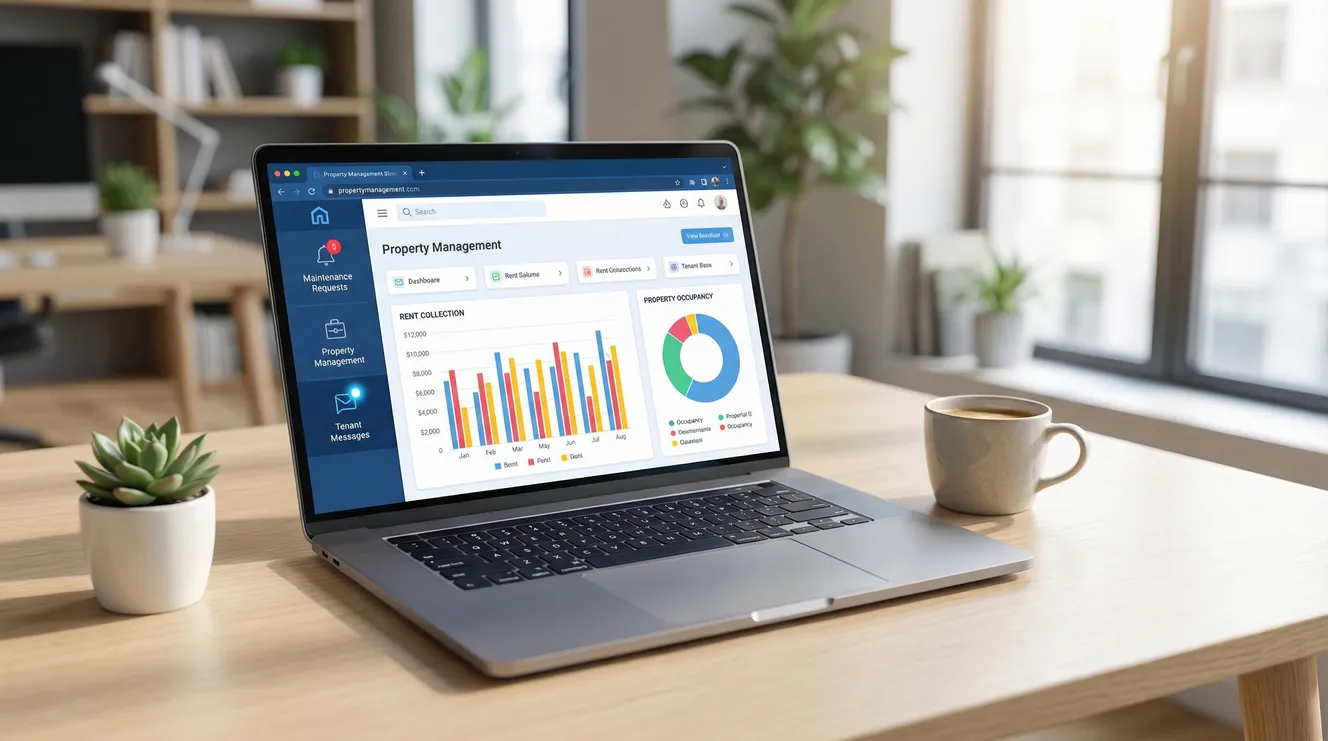
The modern tenant expects digital self-service comparable to their banking or shopping experiences. A robust tenant portal eliminates the “landlord as bottleneck” problem, allowing residents to submit maintenance requests with photos, track work order status, pay rent via ACH or card (with processing fees often passed to tenants), and access lease documents without texting you at midnight.
Screening integration separates serious platforms from basic rent trackers. Look for software that partners with TransUnion, Experian, or Equifax to provide credit checks, criminal background searches, and eviction history without you handling sensitive applicant data. The best systems allow prospective tenants to pay screening fees and submit applications online, creating a digital paper trail that Fair Housing compliance auditors appreciate.
Communication logging provides legal armor. When disputes arise—and they will—courts favor landlords who can produce documented communication histories. Software that maintains timestamped message threads, email integration, and SMS logging within the tenant file creates the evidentiary record that verbal agreements or scattered text messages cannot. Platforms like RentRedi emphasize this communication trail as a core compliance feature.
The Mobile Imperative
Property management happens in the field—at vacancies, during inspections, in emergency situations. Native mobile apps (not just mobile-responsive websites) allow you to photograph damage, log expenses immediately, and approve applications while standing in the unit. Inspect the app’s offline functionality; if you lose signal in a basement storage unit, you need the ability to sync data once you regain connectivity.
Maintenance Orchestration: From Panic to Process
Maintenance coordination consumes disproportionate mental bandwidth for landlords. The 2 AM emergency call, the contractor who didn’t show, the tenant complaining about slow repairs—these friction points destroy retention. Sophisticated software transforms maintenance from reactive chaos into managed workflow.
Work order systems should allow tenants to categorize requests (emergency/urgent/routine), upload photos, and specify access instructions. You then need vendor management: a database of preferred contractors with insurance verification, contact details, and historical pricing. The best platforms (like Propertyware) allow direct assignment to vendors with tenant notification, then track completion and collect tenant satisfaction ratings.
Preventive maintenance scheduling separates professional operators from perpetual crisis managers. The software should track appliance warranties, HVAC filter replacement schedules, and seasonal inspections, generating automated reminders before failures occur. A $200 furnace filter replacement scheduled by the system prevents the $3,000 emergency repair that happens when you forget.
The Maintenance Workflow Spectrum
Basic: Tenant emails/texts you; you call contractors manually; payment tracked in spreadsheet
Managed: Tenant submits portal request; you assign to vendor; payment tracked in software
Optimized: Tenant submits request with photos; software suggests vendor based on issue type/location; tenant approves estimate online; payment auto-deducted from escrow; satisfaction survey triggers follow-up
Portfolio Architecture: Scaling Without Fragmentation
The software that manages three units adequately may collapse under the complexity of thirty. Scalability considerations include multi-owner structures (if you manage for investors), commercial vs. residential mixed portfolios, and multi-state compliance where different landlord-tenant laws apply.
Unit-based pricing models punish growth. Many platforms charge per door—$10-15/month per unit. At five units, this is negligible; at fifty units, you’re paying $500-750/month for software. Flat-rate pricing (often tiered by unit count ranges) preserves margins as you scale. However, scrutinize “unlimited” plans for hidden limits on transactions, storage, or users that trigger expensive overages.
Vacancy management tools become critical at scale. You need listing syndication (pushing vacancies to Zillow, Apartments.com, Facebook Marketplace simultaneously), showing scheduling that prevents double-booking, and lead tracking that measures which marketing channels produce qualified tenants. Software like MRI Software specializes in these enterprise-level marketing and leasing workflows for larger portfolios.
The Integration Web: Playing Nice With Your Stack
Property management software doesn’t operate in isolation. It must sync with your business bank accounts (for automated reconciliation), tax software (TurboTax, CPA portals), and marketing platforms. API access separates closed systems from extensible infrastructure—if the platform doesn’t integrate with your preferred accounting software natively, robust APIs allow Zapier or custom developers to bridge the gap.
Smart home integration represents emerging functionality. Platforms that connect to smart locks allow temporary codes for showings without you present; water leak sensors can trigger automatic work orders before catastrophic damage; thermostat controls enforce reasonable energy usage during vacancies. These IoT connections reduce physical site visits—the hidden time cost that destroys profitability on scattered-site portfolios.
Pricing Models: The True Cost of Ownership
Beyond subscription fees, property management software extracts costs through payment processing (ACH typically 1-2%, credit cards 2.9-3.5%), setup fees, training charges, and “white glove” onboarding. A platform advertising $50/month might cost $200/month after payment processing on $10,000 rent collection.
Freemium models (like Cozy, now part of Apartments.com) offer basic rent collection and maintenance tracking for free, monetizing through credit check fees and expedited payments. These work for single-unit landlords but typically lack the accounting rigor and owner-reporting features necessary for professional management. Treat freemium as a trial, not a destination.
Hidden Cost Audit Checklist
Payment Processing: Who pays the credit card fees? Is there a markup on ACH transfers?
Data Export: Will you be charged to extract your data if you switch platforms later?
User Limits: Do you pay extra for accountants, virtual assistants, or property owners to access reports?
Support Tiers: Is phone support included, or do you pay $200/hour for help setting up your chart of accounts?
Implementation Reality: Migration Without Vacancy
Switching property management software while managing active tenancies resembles changing the engine while driving. Data migration includes tenant contact information, lease terms (start/end dates, rent amounts, security deposits), historical payment records, and outstanding maintenance issues. If this transfer happens mid-month, you risk double-charging tenants or losing the audit trail for security deposits.
Most platforms offer onboarding support, but quality varies dramatically. Expect 30-60 days to fully transition, running parallel systems (old and new) for at least one rent cycle to ensure no payments disappear into the void. Verify that the new platform can import your existing lease data via spreadsheet; manual entry of twenty tenant profiles is error-prone and soul-destroying.
Tenant communication about the switch requires careful handling. Frame the new portal as improved service (“You’ll now be able to pay online and submit maintenance photos!”), not as your administrative convenience. Provide paper backup for the first month—don’t let a tenant’s inability to navigate the app become grounds for a late payment dispute.
Your Property Deserves Professional Infrastructure
The software you choose to manage your rental properties isn’t a back-office luxury—it’s the chassis that supports your entire investment strategy. When you rely on spreadsheets and Venmo, you aren’t saving money; you’re accumulating legal risk, tax preparation nightmares, and the chronic stress of operational chaos. Every hour you spend manually reconciling which tenant paid what, or digging through text messages to prove you responded to a maintenance request, is an hour not spent finding the next deal or improving your properties.
Your power to build a scalable real estate portfolio doesn’t depend on buying more units; it depends on systems that allow you to manage those units without becoming a full-time superintendent. The right platform enforces the financial discipline that protects your assets, creates the documentation that wins in court, and delivers the tenant experience that reduces turnover.
The choice is yours. You can remain the landlord who handles everything manually, who wakes up to midnight texts about clogged drains, who dreads April because of the tax preparation nightmare. Or you can implement the infrastructure that separates investors from landlords—the digital systems that let you own properties without them owning you. Start with the accounting features that ensure compliance, add the tenant portals that create self-service, and build toward the maintenance automation that preserves your sanity. Your properties are long-term assets; manage them with software built for the long haul.
Key Takeaways
Industry-specific accounting features (trust accounting, owner draws, 1099 generation) are non-negotiable; generic business software creates legal and tax vulnerabilities for landlords.
Tenant portals with online payment, maintenance photo submission, and digital lease signing reduce landlord involvement in routine tasks while creating legal documentation trails.
Scalability requires evaluation of per-door pricing vs. flat rates, multi-state compliance support, and vacancy management tools that syndicate listings across platforms.
True cost of ownership includes payment processing fees, data export charges, and user limits—not just the advertised monthly subscription rate.
Implementation requires 30-60 days of parallel operation, careful tenant communication about portal transitions, and verification of lease data import capabilities to prevent manual re-entry errors.
“`
Leave a Reply